
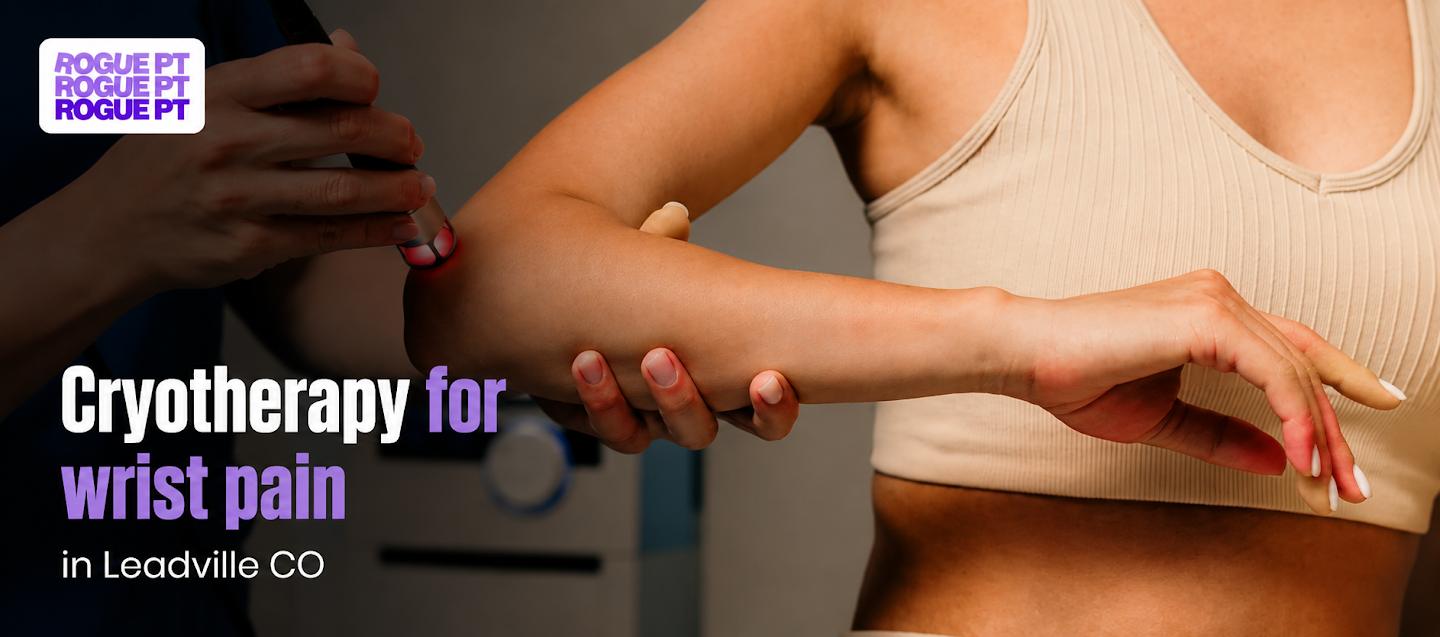
If you’ve been searching for cryotherapy for wrist pain in Leadville, CO, you’re probably dealing with swelling, stiffness, or an ache that just won’t quit — whether it flared up after a fall on the trail, a long day of climbing, or repetitive strain from work. At elevations above 10,000 feet, everyday activities in Leadville place unique demands on your joints, and wrist pain can quickly interfere with the things you love doing outdoors. At Rogue Physical Therapy & Sports Medicine, our Doctor of Physical Therapy-led team combines cryotherapy, cold compression therapy, and individualized rehabilitation to help you recover safely and get back to full function.
This guide breaks down how cryotherapy for wrist pain in Leadville, CO, works, what conditions it helps with, what a typical treatment plan looks like, and how it fits into a broader recovery strategy that includes flexibility training and clinical strength training.
Key Takeaways
- Cryotherapy for wrist pain in Leadville, CO,reduces inflammation, numbs pain signals, and can support faster wrist recovery when used correctly.
- It works best as part of a comprehensive plan that includes movement assessment, therapeutic exercise, and strength training.
- Cold compression therapy combines the benefits of ice and gentle pressure to control swelling more effectively than ice alone.
- At-home cold compression can complement in-clinic care, but persistent or worsening pain should be evaluated by a Doctor of Physical Therapy.
- Rogue Physical Therapy & Sports Medicine delivers personalized rehabilitation in Leadville, combining evidence-based treatment with strategies for injury prevention and high-altitude performance.
What Is Cryotherapy, and How Does It Help Wrist Pain?
Cryotherapy refers to the therapeutic use of cold to reduce pain, swelling, and inflammation in an injured area. Cryotherapy for wrist pain in Leadville, CO, targets the tendons, ligaments, and joint tissues most commonly affected by overuse, trauma, or repetitive stress.
When cold is applied to the wrist, blood vessels constrict, which limits swelling and slows the inflammatory cascade that often makes pain worse in the first 24–72 hours after an injury. Cold also has a numbing effect on nerve endings, which can meaningfully reduce the perception of pain during the acute phase of recovery.
Cryotherapy vs. Cold Compression Therapy
While standard cryotherapy typically involves ice packs or cold air/gel applications, cold compression therapy in Leadville, CO takes this a step further by combining cold with mechanical pressure. This dual-action approach is often more effective for wrist injuries because compression helps move excess fluid away from the joint, further limiting swelling while the cold manages pain.
Common Conditions That Respond Well to Cryotherapy
Wrist pain has many possible causes, and identifying the correct one matters for treatment. Conditions that often respond well to cryotherapy and cold compression include:
- Wrist sprains and strains from falls, skiing, or trail activities
- Tendinitis, including De Quervain’s tenosynovitis, common in repetitive gripping or lifting
- Carpal tunnel syndrome flare-ups with associated swelling
- Post-fracture or post-cast swelling during the healing phase
- Overuse injuries from climbing, mountain biking, or manual labor
- Post-surgical swelling following wrist procedures
A Doctor of Physical Therapy will perform a thorough movement assessment to determine which of these — or another underlying issue — is driving your symptoms before recommending a treatment approach.
How Cryotherapy Fits Into a Full Recovery Plan
Cryotherapy for wrist pain in Leadville, CO, alone rarely resolves wrist pain long-term. It’s most effective when paired with a structured rehabilitation plan built around your specific diagnosis, goals, and activity level.
Movement Assessment First
Every effective treatment plan starts with understanding why the wrist is painful. A movement assessment looks at wrist and forearm mechanics, grip strength, joint mobility, and how the shoulder and elbow may be contributing to strain further down the chain.
Therapeutic Exercise and Flexibility Training
Once acute swelling is under control, flexibility training in Leadville, CO helps restore normal range of motion in the wrist and forearm. Gentle stretching and mobility work prevent stiffness from setting in and prepare the joint for loading.
Clinical Strength Training
As pain decreases, strength training in Leadville, CO becomes central to recovery. This isn’t generic gym programming — it’s exercise prescription designed by a Doctor of Physical Therapy to progressively rebuild grip strength, wrist stability, and tendon resilience without re-aggravating the injury.
Injury Prevention
Because Leadville’s terrain and altitude place added demands on the body, our team also focuses on injury prevention strategies, including activity modification, ergonomic adjustments, and load management for climbers, skiers, and outdoor athletes.
What to Expect During a Cryotherapy for Wrist Pain in Leadville, CO, Session at Rogue Physical Therapy & Sports Medicine
A typical visit begins with a clinical evaluation of your wrist, including a review of your injury history and current symptoms. Depending on findings, your Doctor of Physical Therapy may apply localized cryotherapy or cold compression therapy directly to the area, often combined with:
- Manual therapy techniques to improve joint mobility
- Guided therapeutic exercise to maintain safe movement
- Education on activity modification during the healing window
- A customized at-home exercise plan designed to reinforce your recovery between visits.
Sessions are typically short, well-tolerated, and designed to reduce pain quickly while setting the stage for the strengthening phase of rehabilitation.
At-Home Cold Compression Tips
Many patients ask about cold compression therapy at home in Leadville, CO to manage symptoms between clinic visits. These general tips can help:
- Use cold compression for 15–20 minutes at a time, giving your skin adequate time to warm back up between applications.
- Always use a barrier (thin cloth or wrap) between ice and skin to prevent frostbite, especially important at Leadville’s altitude where skin sensitivity can be affected by cold, dry air.
- Elevate the wrist above heart level during application to further reduce swelling.
- Avoid applying cold directly over open wounds, areas with poor circulation, or numb skin.
- Use cold compression after activity, not as a substitute for professional evaluation of ongoing or worsening pain.
At-home care can support your recovery, but it works best when guided by a personalized plan from a Doctor of Physical Therapy.
Myth vs. Fact: Cryotherapy for Wrist Pain
Myth: Ice should be applied constantly for the first few days after an injury. Fact: Cold should be applied in intervals (typically 15–20 minutes), not continuously, to avoid skin damage and rebound swelling.
Myth: Cryotherapy alone will fix a wrist injury. Fact: Cryotherapy manages symptoms; lasting recovery requires therapeutic exercise, mobility work, and strength training.
Myth: Heat is the best solution for every type of joint pain. Fact: Cold is generally preferred in the acute (swelling) phase, while heat may be introduced later to support flexibility and circulation — timing matters.
Myth: If a home ice pack helps, professional treatment isn’t necessary. Fact: Temporary relief doesn’t address the underlying cause; a movement assessment can identify issues that self-treatment may miss.
When to See a Doctor of Physical Therapy
While mild wrist discomfort can sometimes be managed with rest and at-home cold compression, it’s time to schedule an evaluation with a Doctor of Physical Therapy if you experience:
- Persistent swelling or discomfort lasting more than a few days.
- Numbness, tingling, or weakness in the hand or fingers
- Difficulty gripping objects or bearing weight through the wrist
- Pain that returns each time you resume activity
- A visible deformity or suspected fracture (seek emergency care immediately)
- Wrist pain that limits your ability to work, climb, ski, or train
Early evaluation often leads to faster, more complete recovery and helps prevent minor issues from becoming chronic problems.
Why Choose Rogue Physical Therapy & Sports Medicine
Led by a Doctor of Physical Therapy, Rogue Physical Therapy & Sports Medicine brings extensive experience helping Leadville’s active community recover, perform better, and thrive in a high-altitude environment. Our approach combines evidence-based cryotherapy and cold compression techniques with individualized movement assessment, therapeutic exercise, and clinical strength training — all tailored to the demands of high-altitude living and mountain athletics.
We don’t offer generic programming. Every plan is built around your specific diagnosis, goals, and lifestyle, whether you’re recovering from a trail fall, managing overuse from climbing season, or returning to work after a wrist injury. Our focus on injury prevention means we’re not just treating your current pain — we’re helping you avoid the next one.
Conclusion
Wrist pain doesn’t have to keep you off the trail, out of the gym, or away from the work you love. With guided cryotherapy, cold compression therapy, and a personalized rehabilitation plan built around flexibility and clinical strength training, Rogue Physical Therapy & Sports Medicine helps Leadville residents recover fully and prevent future injury. If wrist pain is slowing you down, don’t wait for it to become a bigger problem — expert, evidence-based care is available right here in Leadville, Colorado.
Frequently Asked Questions
1. How does cryotherapy help with wrist pain specifically?
Cryotherapy for wrist pain in Leadville, CO, reduces blood flow to the injured area, which limits swelling and numbs pain receptors, making it especially useful in the first few days after a wrist injury or flare-up.
2. What’s the difference between cold compression therapy and a regular ice pack?
Cold compression therapy combines cooling with gentle mechanical pressure, which more effectively reduces swelling compared to a standard ice pack alone.
3. Can I do cold compression therapy at home, or do I need to see a physical therapist?
At-home cold compression can help manage mild symptoms between sessions, but a Doctor of Physical Therapy should evaluate wrist pain that persists, worsens, or affects grip strength and daily function.
4. How soon can I start strength training after a wrist injury?
Timing depends on your specific diagnosis and healing stage. A Doctor of Physical Therapy will guide you through flexibility training first, then progress you into clinical strength training once swelling and pain are controlled.
5. Can everyone safely benefit from cryotherapy for wrist pain in Leadville, CO,?
Cryotherapy for wrist pain in Leadville, CO, is safe for most people, but it should be avoided or modified for those with certain circulatory conditions, cold sensitivity, or nerve issues. A movement assessment helps determine the safest approach for your situation.